


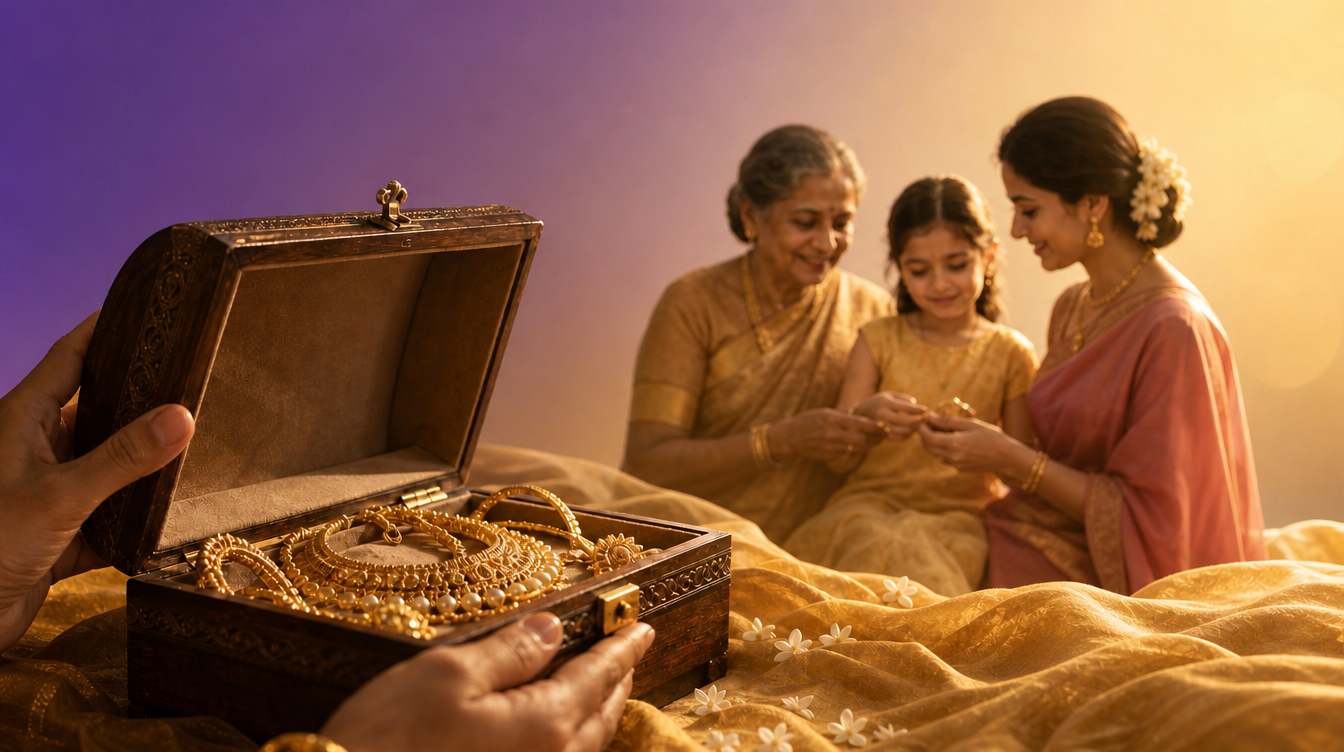
Open almost any Indian household's locker, and you'll find the same pattern repeating itself. A necklace worn once, at a wedding fifteen years ago. Bangles from a grandmother who passed them down with more ceremony than explanation. Coins gifted at a naming ceremony, still in their original velvet pouches. None of it gets worn. Most of it hasn't even been taken out to look at in years. And yet almost nobody considers parting with it.
This isn't irrational. It's a very specific kind of psychology, and understanding it explains why gold behaves so differently from every other asset Indian families own.
Gold Isn't Bought to Be Spent
Most financial assets are bought with an eventual purpose in mind: a mutual fund for retirement, a fixed deposit for a specific goal, a stock for growth. Traditional gold ornaments rarely work that way. They're bought around events: weddings, births, festivals, and the purchase itself is often the point. The gold becomes a marker of that moment, not a tool meant for later use. Once it's acquired, its job is largely done. Wearing it again, or worse, selling it, feels almost beside the point.
This is why so much old gold jewellery sits untouched. It was never bought with liquidity in mind. It was bought as a record of something.
The Emotional Weight Outlasts the Financial Logic
Ask a family why they haven't sold gold they clearly don't use, and the answer is rarely about price. It's about who gave it, what occasion it marks, or what it represents if passed on to the next generation. A mother's wedding set isn't just 40 grams of gold; it's tied to a specific memory that a bank transfer can never replicate. Even when families genuinely need money, this emotional weight tends to override the financial argument for selling.
That's precisely why so many people struggle with the question of what to do with old jewellery. Selling feels final and slightly wrong. Keeping it feels safe but wasteful. Most families end up doing neither, just leaving the gold exactly where it's been for years, unresolved.
You May Also Like: Beyond Mutual Funds: The Retirement Asset Most People Skip
Why Families Fear Selling Too Early?
There's also a more practical hesitation: the fear of selling too early. Families often delay selling because they worry about missing out on further appreciation, or because checking the old gold jewellery price feels discouraging compared to what the piece originally cost in making charges and sentiment. Gold investment returns over the long run have historically been strong, so the instinct to "just wait" isn't unreasonable, but it also means gold sits idle for years under the guise of a wait-and-watch strategy that never actually resolves into a decision.
A Hypothetical Worth Sitting With
Consider a family holding 25 grams of old jewellery: a mix of a chain, a couple of bangles, and a ring nobody wears. They've debated selling it for years but never gone through with it, partly because of memory, partly because of the melting and making-charge loss that comes with a sale. If instead of selling, that same gold had simply been left in a locker for the past five years, its only growth would have come from the rising market price: meaningful, but entirely passive.
Now imagine that instead of doing nothing, the family had chosen to monetise gold without selling it, leasing it out under an agreement while retaining full ownership. Over that same five-year period, the 25 grams could realistically have grown to somewhere around 27–28 grams, purely from the leasing arrangement, in addition to whatever the market price did. The emotional value of the gold stays completely intact; nothing was sold, nothing was given up, but it's no longer sitting entirely idle either.
You May Also Like: Gold Leasing in India: Know Benefits, Process and Returns
Why This Resolves the Psychological Deadlock?
What makes this option interesting isn't that it's more profitable than selling; it's that it doesn't force the emotional decision at all. Families don't have to reconcile sentiment with financial logic, because gold leasing doesn't ask them to choose. The gold earned from leasing can later be used to make jewellery that can be worn, gifted, or passed down, just as gold is meant to be. The difference is that, instead of remaining dormant during the years it might have sat untouched, it can generate value through leasing and eventually find its way back into jewellery in a new form.
For a lot of families, this turns out to be the missing middle ground between two options that never felt right: selling something with too much meaning attached, or leaving genuine value locked away out of habit.
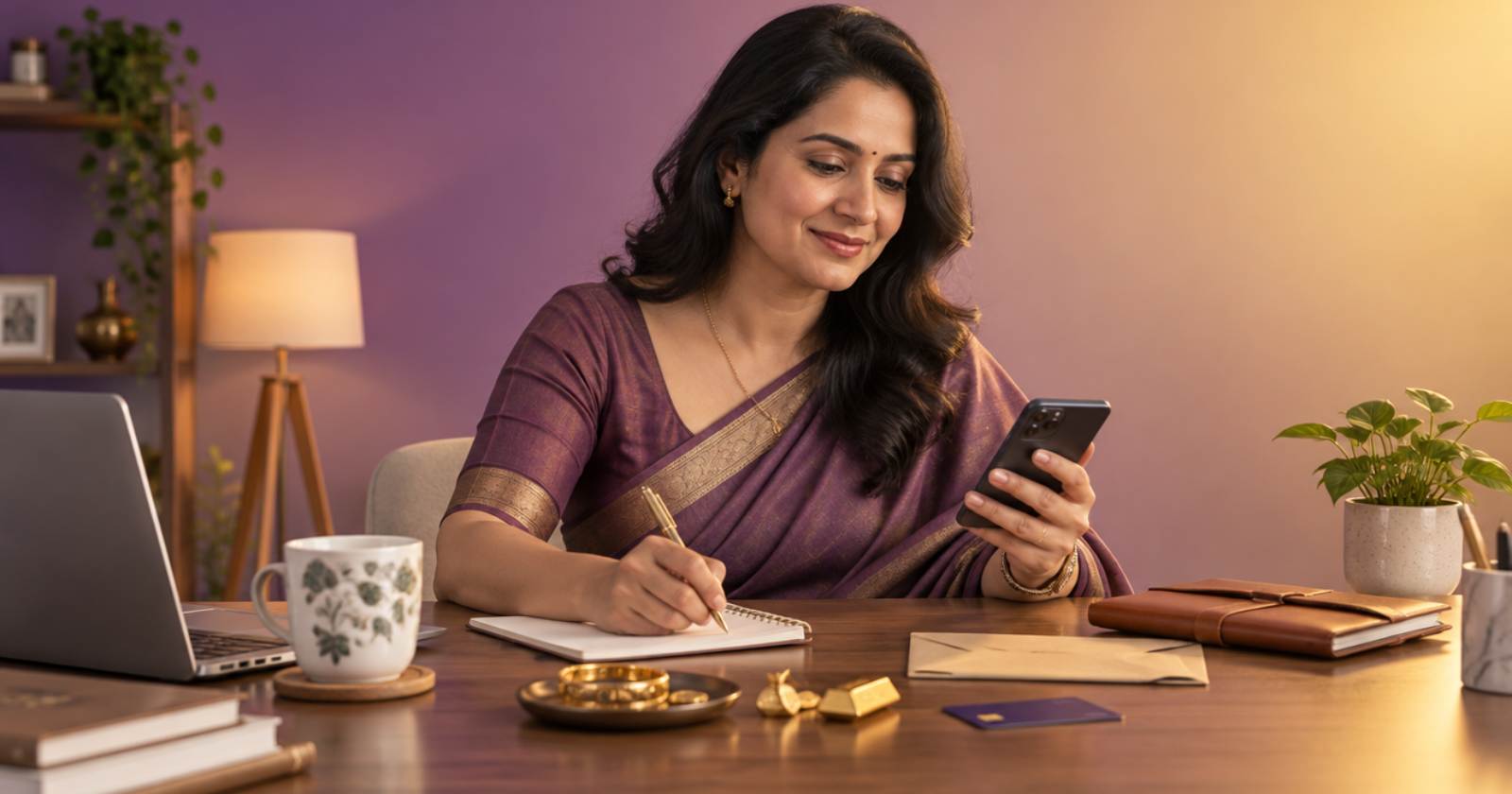
This is where a platform like myGold becomes relevant for families caught in exactly this deadlock. It allows both physical and digital gold to be leased under a formal agreement on stamp paper, while ownership stays entirely with the family throughout. For someone who has spent years unsure of what to do with old jewellery they'll never wear but will also never sell, it offers a way to let that gold contribute something, without disturbing what it represents.
In Conclusion
The reluctance Indian families feel toward their old gold isn't a financial blind spot, it's an entirely human response to objects that carry more than monetary value. Gold leasing doesn't ask anyone to override that instinct. It gives long-idle gold a way to grow in weight, quietly , while everything it was always meant to represent stays exactly where it belongs.
FAQs
1. Why is gold considered family wealth?
Gold is often viewed as family wealth because it can be passed down through generations and because families see it as something they can turn to when they need financial support.
2. Why do people avoid selling jewellery?
People often avoid selling jewellery because it has emotional and cultural value beyond its monetary worth. Jewellery may be associated with weddings, family traditions and important life events.
3. Why do Indians buy gold every year?
Gold buying in India is influenced by cultural traditions, festivals, weddings and the belief that gold is a reliable way to preserve wealth over the long term.
4. Why do Indians wear a lot of gold?
Gold jewellery has deep cultural significance in India. It is commonly worn during weddings, festivals and celebrations and is also seen as a visible form of wealth.