



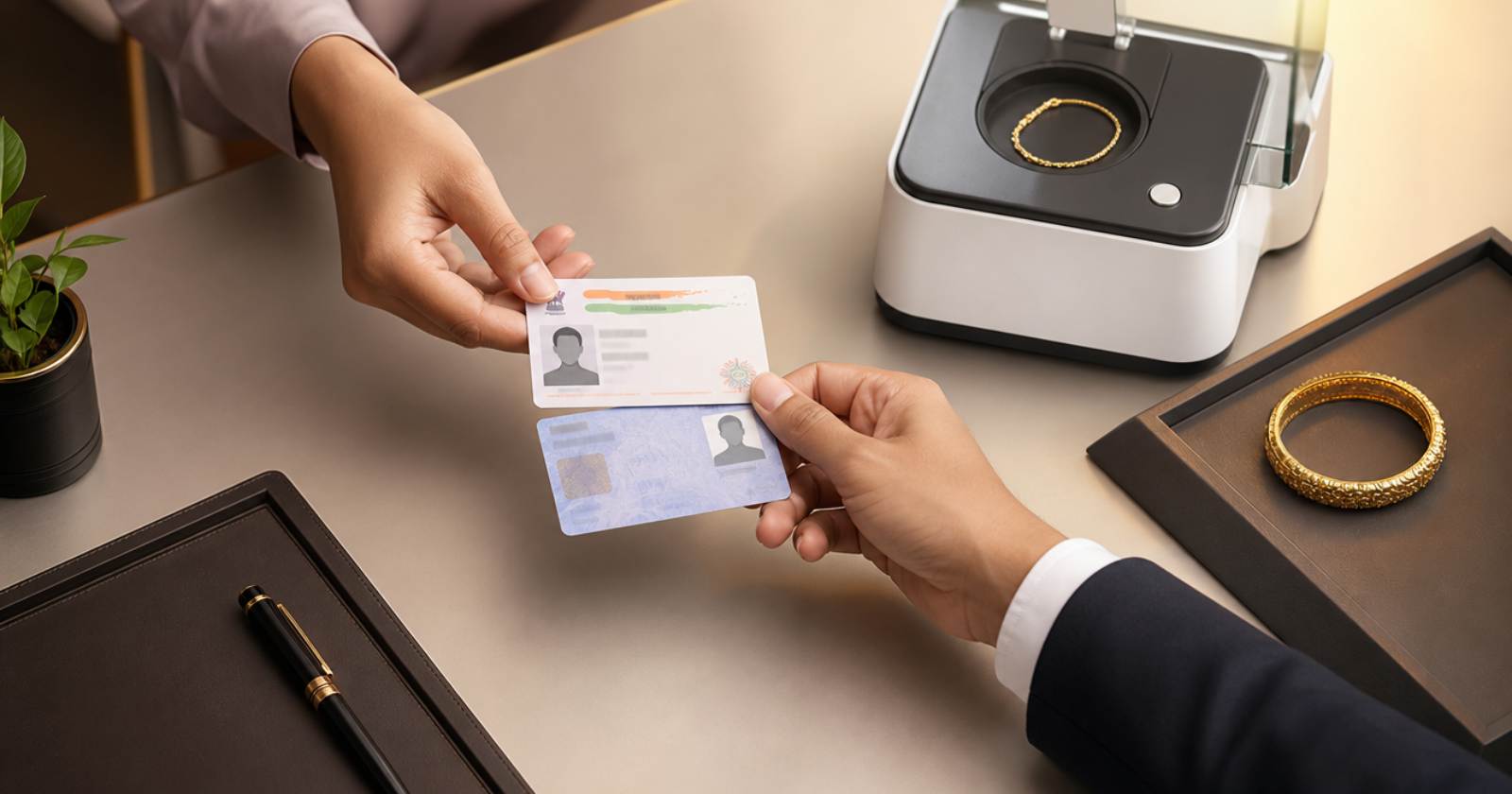
So you've decided to sell some old gold jewellery lying at home. Before walking into a shop, most people want to know one thing: what papers will I need, and will the tax department come asking questions? It's a fair worry, since so much gold in Indian households has no paperwork at all, passed down through generations or bought in cash decades ago. This article walks through the documents required to sell gold, what happens if you don't have a bill, and roughly how much tax you'll owe once the sale is done.
The Basic Documents You'll Need
Every buyer, whether a neighbourhood jeweller or an organised gold buying company, will ask for identification. This isn't paperwork for show; it's tied to anti-money-laundering rules gold dealers must follow.
Keep these ready:
A government photo ID (Aadhaar, PAN card, voter ID, or passport)
Address proof, if different from your ID
The original purchase bill, if you still have it
PAN card, compulsory once the transaction crosses Rs 2 lakh in cash
If the gold was inherited, a copy of the will or a family declaration helps establish it's legitimately yours, especially for larger quantities. None of this complicates a simple sale; it exists so both sides have a clean paper trail.
Can You Sell Gold Without a Bill?
Yes, you can sell gold without a bill, and this is one of the most common situations buyers deal with. Wedding jewellery from thirty years ago, or gifts from grandparents, rarely come with a receipt.
Reputable buyers will still take it. What changes is how they establish purity and value: instead of an old invoice, they run scientific testing like XRF analysis to check the karat and price it against that day's rate. You'll still get an invoice for the sale itself, which becomes your new proof of transaction. Avoid anyone who won't give you a sale invoice at all, since that leaves no record if a tax query comes up later.
You May Also Like: What to Check Before Selling Gold for Maximum Value
Understanding Tax on Selling Gold in India
This is where people get confused, so here's the short version. Tax on gold sale in India depends entirely on how long you've held it.
Holding Period | Classification | Tax Treatment |
24 months or less | Short-term gain | Added to income, taxed at your slab rate |
More than 24 months | Long-term gain | Flat 12.5%, no indexation benefit |
Indexation, which lets you adjust purchase cost for inflation, was removed for gold sold after July 2024. So on a long holding, 12.5% applies to the straightforward gain, not an inflation-adjusted figure. No original bill? A jeweller's valuation or a fair market value estimate can establish the cost of acquisition instead.
How to Sell Gold in India, and Where
If you're wondering where can I sell gold, the options have multiplied lately: your regular jeweller, dedicated gold buying chains, banks that buy back certain coins, and newer platforms built around organised, documented buying.
What matters more than the label is the process. A fair buyer tests purity in front of you, weighs accurately, quotes against the sell gold rate today rather than an arbitrary figure, and pays instantly once you agree. myGold's sell old gold service is built around exactly this. For anyone looking to convert idle gold or jewellery into cash, myGold offers:
Scientific XRF testing. 100% non-destructive. Done in front of you.
Ultrasonic cleaning before weighing. Precision up to 0.001 gram.
Live market-linked pricing. What you see is what you get.
High-quality crucibles. No gold loss during melting.
Instant bank transfer (IMPS/NEFT/RTGS). Payment within minutes, no delay.
Accept all jewellery. BIS or not. Purity verified scientifically.
You only need government IDs Aadhaar and PAN to begin.
If your question is where can I sell my gold for cash without haggling over vague estimates, a transparent, invoice-backed process tends to work out better than an undocumented one, even when the per-gram rate looks similar on paper.
You May Also Like: How NRIs Can Turn Idle Gold Into an Earning Asset
Before You Decide to Sell
Not every piece of old gold needs to be sold outright. If you're not in urgent need of cash, it's worth weighing the gold investment returns from holding against cashing out today. Selling makes sense when you need liquidity now, while holding can suit those who see their gold as a long-term store of value.
Either way, build the documentation habit. Keep your ID handy, ask for every sale invoice, and know your holding period before you sell, since that one fact decides your tax bracket on the gain.
FAQs
How much tax will I pay if I sell gold?
If held under 24 months, gains are taxed at your income slab rate. Beyond that, it's a flat 12.5%, without indexation benefit.
Do I need any documents to sell gold?
Yes, carry government photo IDs like Aadhaar and PAN. A purchase bill helps but isn't mandatory for a valid sale.
Is it worth selling old gold jewellery?
Depends on your need. If you need cash now, selling works; otherwise, you may prefer to hold it and compare the potential returns before deciding.
What are the rules for selling gold in India?
Buyers need your ID for compliance, PAN for cash above Rs 2 lakh, and should issue a sale invoice regardless of whether you have the original bill.